

First major road in Ellis County was a military road that cut through the middle of Ellis County near downtown Waxahachie in 1850. It ran from the Red River to San Antonio. Another road later crossed Eastern Ellis County and went from Dallas to Houston. The commissions court of Ellis County declared these two roads the first official roads in Ellis County in 1860.
Hans Smith reportedly built the first cotton gin in Ellis County in Palmer near Red Oak Creek.
William R Howe was believed to be the first white settler in Ellis County back in 1843.
Edward H Tarrant is believed to have built the first mill in Ellis County. Tarrant County was named in his honor.
Willie Love was the first black man to serve as city commissioner in Ellis County on June 19, 1969.
Blog Catalog

Subscribe To

 Posts
All Comments
Posts
All Comments
Monday, September 10, 2007


Wednesday, September 5, 2007
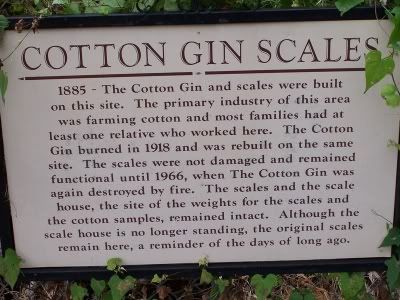
Cotton Gin Scales Ovilla, Texas
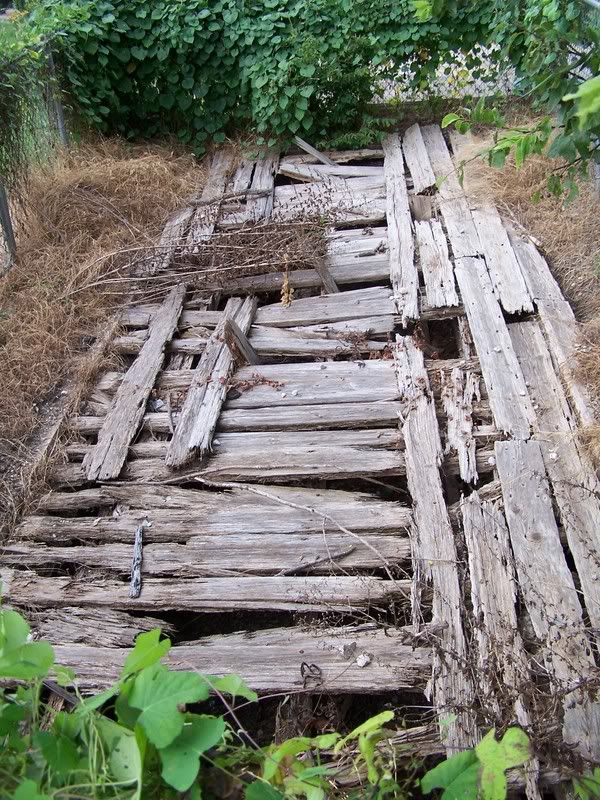
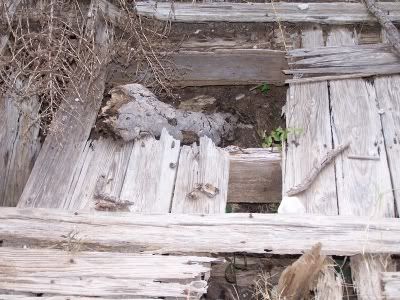
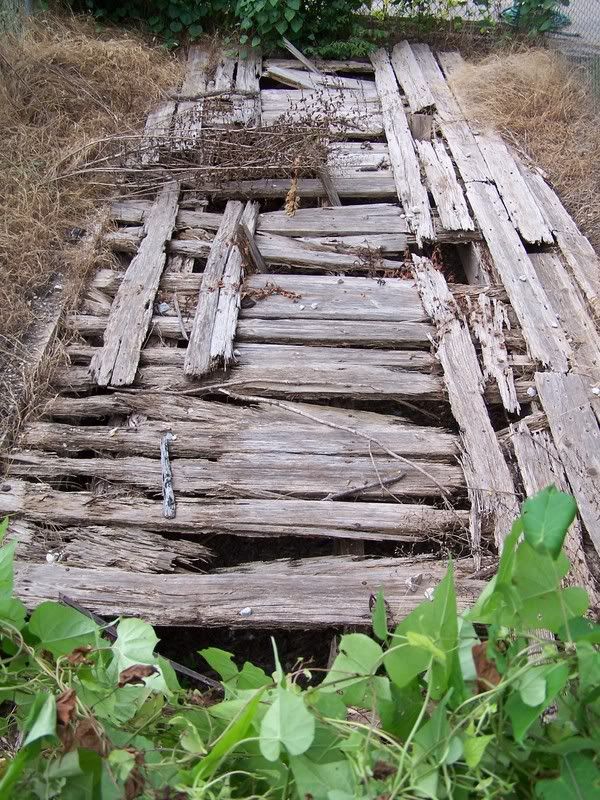
The way I've been told is that the wagon loaded with cotton would ride upon the wooden platform and be weighed. I believe the measuring device were in the building next to the scales. Then after the cotton was unloaded they would weigh the wagon again. The difference was how much cotton the farmer would get paid for. I guess the wood scales floated. It would be kind of like when you got to the dump and they weigh your vehicle when you come in and weigh you after you dump your stuff. Then you pay by the weight difference. Pretty amazing that scales have lasted all this time even after al the fires of 1918 and 1966.

Thursday, August 30, 2007
Ellis County Museum may have Halbard Head from Desoto's Expedition
Around 15 years ago at the Ellis County Museum, I saw this intriguing artifact on display. I recently emailed the Museum director to make sure I remembered it correctly. The Director, Mr. Shannon Simpson responded,
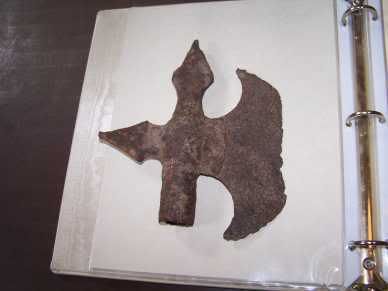
It has basically been sitting in storage for quite a while. Mr Simpson gave me the privilege to take pictures of it. I thought to myself that if it was a Conquistador artifact it would be a big find. They are very rare and Ellis county isn't known for any metal artifacts from the Spanish expedition times.


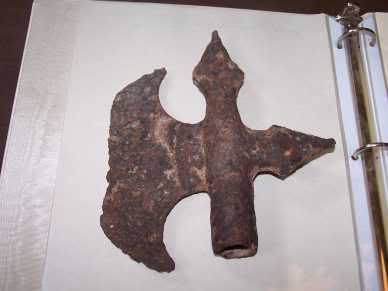
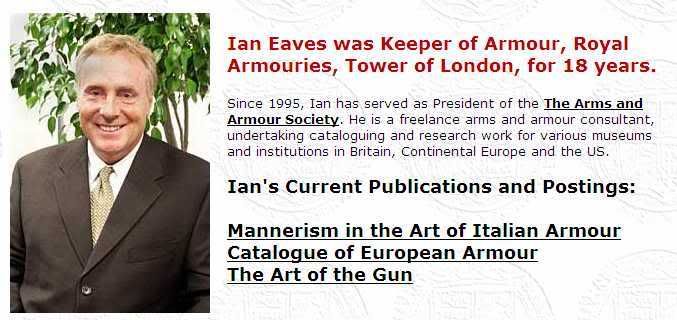
So I took my pictures and started Googling. Nada! There is nothing really out there on the net to use as a reference to this artifact. I even tried to look for paintings that depict the Conquistador armies or Spanish explorers. Then I came across a fella who had a web-site about the Spanish explorers. Don Sheppard was the fella from Florida History and he referred me to an expert from England. Ian Eaves is an expert in European armour and weapons. He has worked on European armour and weapon's books and has worked for museums to help Catalogue their armour and weapons. He has been President of The Arms and Armour Society since 1995. He graciously answered my email and to my disappointment sent this reply to my pictures.
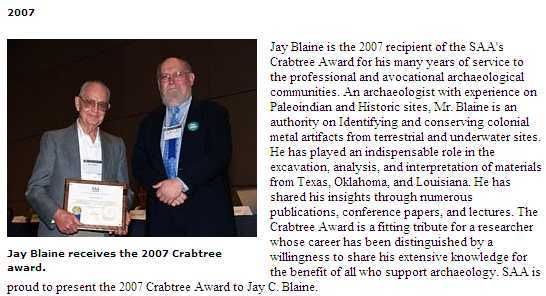
Well I informed Shannon of the bad news and we both were like "oh well" you can't win them all. In my mind it was still stirring, Where did this thing come from? Why does it exist? Is it something where somebody was just playing around and made it? Was it made for decoration? Why would it be in a creek(reportedly found in or near a creek)? Maybe it was made after the explorers got here? With crude resources to shape iron it would look,well, crude. I imagine Mr. Eaves was use to museum quality probably more ornamental type of weapons. I imagine the crudely made ones he has seen were established to be forgeries. But I doubt he has seen many weapons actually made in North America. I'm sure very few have ever been found. But I'm not going to challenge an expert. I thought there might be a more local expert I could contact. So just for the heck of it I looked up an SMU archaeologist. I'm sorry I can't remember the SMU professor's name but he was a nice fella and gave me another professor to contact named Grant Hall from Texas Tech. Dr. Grant was also nice and then informed me "one of the leading experts on Spanish metal artifacts" lived not to far from me. A Mr. Jay Blaine who is a self-made expert Archaeologist. Specializing in metal artifacts. Something that he started as a hobby became something that he is very, very good at and the Professors look to him for answers. He is the recipient of the Crabtree Award. He is known for his work on The Gilbert Site. Fascinating archeology site near Lake Fork.
Mr Blaine graciously wrote this letter to Shannon and I.
(Just a note: a few times Mr Blaine refers to the Ellis County Museum as the Ennis Museum. Probably because I told him I work in Ennis)
I found this on the internet about Luis de Moscoso
In conclusion, Mr Blaine is not claiming this artifact is the real deal. He is leaving the possibility of it being the real deal open. He admits it is crude and not European. But his observation of the artifacts picture leaves him to speculate how it might have gotten into Ellis County. Mr Eaves observation of the pictures left him to think the artifact was a forgery. In his mind it was crude and did not match his extensive knowledge European of weapons. Mr Eaves could only imagine that it was a forgery. He has probably came across European forgeries in his European research. But one must look at how this was found. Apparently some one walking a creek or maybe working a field came across it. Then they donated it to the museum. Nobody knows who it was that found it. Museum has never claimed it was the real deal. Mr Eaves probably doesn't realize that the Ellis County Museum is in the 1889 Mason Lodge and needs local donations and volunteers to keep it up and running. What I am saying is that whomever donated the Halbard Head wasn't intending to mislead. Now the original creator of the artifact's intentions, that we may never know. The artifact was intriguing enough for Mr Blaine to recommend it's preservation be taken seriously.
It is an interesting coincidence that Mr Blaine sent a carbon copy of his letter to me to Dr. James H. Bruseth. Shannon Simpson has informed me that Dr. James H. Bruseth will be coming to Ellis County during Archeology month in October. I will post when it is to happen. DEVELOPING........
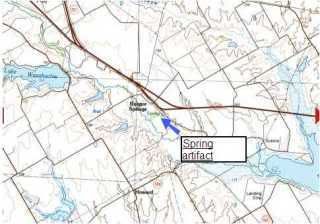 Maybe the location of where the artifact was found. Not much is known about who found it or exactly where. Just Reagor Springs and maybe in a creek. I have a lead that I am going to try to contact who seems to be a history buff on Reagor Springs.
"The artifact you are referring to is thought to be a Spanish conquistador lance-head and the information provided at the time of the donation stated it was found in the vicinity of Reagor Springs. I wish I could elaborate more on the piece but that is all I know."
It has basically been sitting in storage for quite a while. Mr Simpson gave me the privilege to take pictures of it. I thought to myself that if it was a Conquistador artifact it would be a big find. They are very rare and Ellis county isn't known for any metal artifacts from the Spanish expedition times.
So I took my pictures and started Googling. Nada! There is nothing really out there on the net to use as a reference to this artifact. I even tried to look for paintings that depict the Conquistador armies or Spanish explorers. Then I came across a fella who had a web-site about the Spanish explorers. Don Sheppard was the fella from Florida History and he referred me to an expert from England. Ian Eaves is an expert in European armour and weapons. He has worked on European armour and weapon's books and has worked for museums to help Catalogue their armour and weapons. He has been President of The Arms and Armour Society since 1995. He graciously answered my email and to my disappointment sent this reply to my pictures.
"I am sorry to say that the so-called "lance-head" in the Ellis County
Museum is actually a crudely made forgery of an axe-head in the vaguely
"medival style". In truth, it does not really match any authentic type of
axe very closely. I am reasonably confident, even from photographs, that it
was made after the middle of the 19th century and very likely in the 20th
century.
I hope that this answer is of some help to you even if it is not the one
that you ideally wanted to hear.
Yours sincerely,
Ian Eaves"
Well I informed Shannon of the bad news and we both were like "oh well" you can't win them all. In my mind it was still stirring, Where did this thing come from? Why does it exist? Is it something where somebody was just playing around and made it? Was it made for decoration? Why would it be in a creek(reportedly found in or near a creek)? Maybe it was made after the explorers got here? With crude resources to shape iron it would look,well, crude. I imagine Mr. Eaves was use to museum quality probably more ornamental type of weapons. I imagine the crudely made ones he has seen were established to be forgeries. But I doubt he has seen many weapons actually made in North America. I'm sure very few have ever been found. But I'm not going to challenge an expert. I thought there might be a more local expert I could contact. So just for the heck of it I looked up an SMU archaeologist. I'm sorry I can't remember the SMU professor's name but he was a nice fella and gave me another professor to contact named Grant Hall from Texas Tech. Dr. Grant was also nice and then informed me "one of the leading experts on Spanish metal artifacts" lived not to far from me. A Mr. Jay Blaine who is a self-made expert Archaeologist. Specializing in metal artifacts. Something that he started as a hobby became something that he is very, very good at and the Professors look to him for answers. He is the recipient of the Crabtree Award. He is known for his work on The Gilbert Site. Fascinating archeology site near Lake Fork.
In the Post-Oak Savanna about 50 miles east of Dallas is an unusual archaeological site, a place that played a little-known part in Texas history. Here, some 250 years ago, a Caddo-connected Native American group established a deer-hunting and hide-processing camp that produced thousands of deer hides for an international market.I had never even heard of the Gilbert Site but how awesome is that discovery! Mr Blaine also helped with the identification of Coronado's army campsite in the Texas Panhandle.
Mr Blaine graciously wrote this letter to Shannon and I.
(Just a note: a few times Mr Blaine refers to the Ellis County Museum as the Ennis Museum. Probably because I told him I work in Ennis)
"Dear Mr. Bailey,
I truly appreciate your calling attention to this particular artifact in the Ellis County Museum. The artifact photos were excellent and, although not reliable as personal examination, can provide a basis for the following speculations.
The artifact photos strongly suggest this artifact, a Halbard head, is of hand-forged wrought iron. Halbards saw service from the 13th through the 18th centuries. By the 18th century, this general form, a pole axe, had been relegated to serving as a symbol of authority instead of primary service as weapons, and commonly were lighter in form and decorated by fret work and engraving. As is common, only specimens of unusually high (parade) quality have been preserved in the museums and Royal collections and see publication. Those of ordinary quality were used, recycled, seldom preserved to afford direct comparisons.
The convex main blade edge of the Ennis Museum specimen appears to be much less common than the concave to straight blade edge profile typical for those of "parade" quality. The Ennis Museum Halbard also employs a socket whereas long iron straps were commonly used to secure such heads on the shaft and protect it from being cut. However I've seen a notation that early forms were simple and heavy, a description that seems appropriate for the Ennis one.
While I'd personally not favor the term "conquistador" in labeling the possible source of this Halbard head, an early exploring expedition (entrada) such as the Moscoso extension of De Soto's party possibly could have resulted in the artifact being lost in the "Reagor Springs creek".
The 1992 Bulletin of the Texas Archeological Society examined the very scarce Texas artifacts evidence for early European explorations. I much regret no Halbard was brought to our attention. Since that time I've worked with the metal artifacts from the 154] Coronado camp site recently found in west Texas. Again, no Halbard evidence has turned up.
I've no present reason to doubt some Halbards probably were being carried in these 1540's expeditions. These would be valued (even if only for a reworked metal source) and normally only lost by accident, in battle, or some other serious nature of mischance.
Pending other more sophisticated conservation treatment,
I'd strongly recommend this potentially very important metal artifact now be stored in an air-tight container, together with colored silica gel monitored for periodic dehydration. I'd also strongly recommend that you and Mr. Simpson team up to see if any other possibly involved Reagor Springs creek data can be retrieved.
Jay C . Blaine
cc: Shannon Simpson
Ellis County Museum
Dr. James H. Bruseth Director Archeology Division Texas Historical Commission"
I found this on the internet about Luis de Moscoso
In July, 1543 the Tangipahoa probably were watching as seven makeshift boats, carried the battered remnants of De Soto's army of conquistadors past them to the Gulf of Mexico. For four years, the Spanish had crisscrossed the southeast United States running roughshod over its native peoples, but by 1543 they were beaten men. De Soto had died the previous year, and after failing to reach Mexico overland across Texas, his successor, Luis de Moscoso, returned to the "Great River" (Mississippi) for a last desperate effort to escape the interior by following it to the Gulf.Apparently after everything went to pot they tried to go threw Texas to Mexico. Maybe they did pass through Ellis County? And tromping around for 4 years maybe they attempted to make weapons during this time?
In conclusion, Mr Blaine is not claiming this artifact is the real deal. He is leaving the possibility of it being the real deal open. He admits it is crude and not European. But his observation of the artifacts picture leaves him to speculate how it might have gotten into Ellis County. Mr Eaves observation of the pictures left him to think the artifact was a forgery. In his mind it was crude and did not match his extensive knowledge European of weapons. Mr Eaves could only imagine that it was a forgery. He has probably came across European forgeries in his European research. But one must look at how this was found. Apparently some one walking a creek or maybe working a field came across it. Then they donated it to the museum. Nobody knows who it was that found it. Museum has never claimed it was the real deal. Mr Eaves probably doesn't realize that the Ellis County Museum is in the 1889 Mason Lodge and needs local donations and volunteers to keep it up and running. What I am saying is that whomever donated the Halbard Head wasn't intending to mislead. Now the original creator of the artifact's intentions, that we may never know. The artifact was intriguing enough for Mr Blaine to recommend it's preservation be taken seriously.
It is an interesting coincidence that Mr Blaine sent a carbon copy of his letter to me to Dr. James H. Bruseth. Shannon Simpson has informed me that Dr. James H. Bruseth will be coming to Ellis County during Archeology month in October. I will post when it is to happen. DEVELOPING........
Maybe the location of where the artifact was found. Not much is known about who found it or exactly where. Just Reagor Springs and maybe in a creek. I have a lead that I am going to try to contact who seems to be a history buff on Reagor Springs.
Thursday, August 23, 2007
Rural Free Delivery in Ellis County
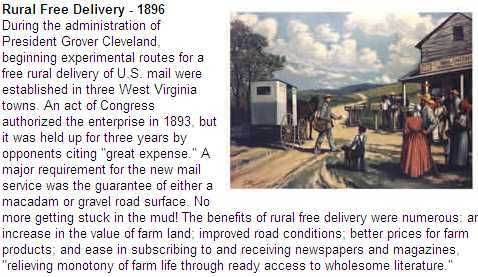
INFO FROM PUBLIC ROADS WEBSITE
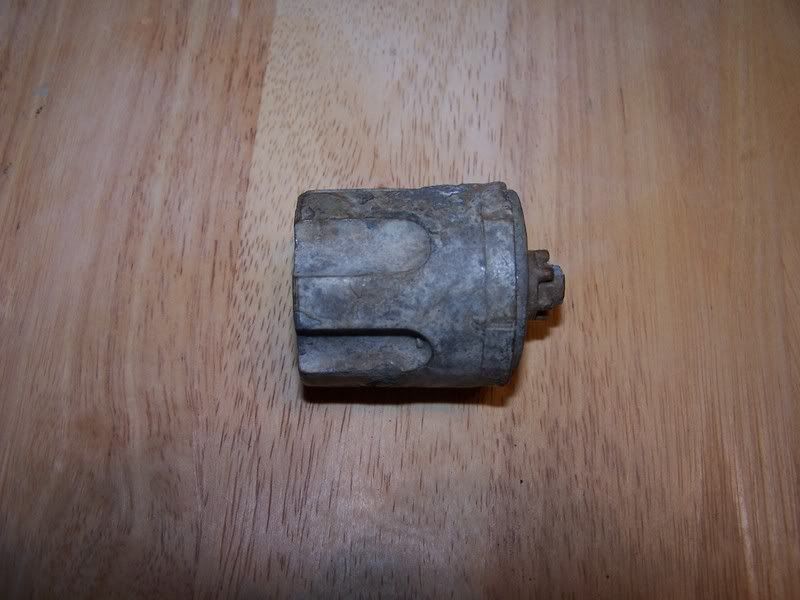
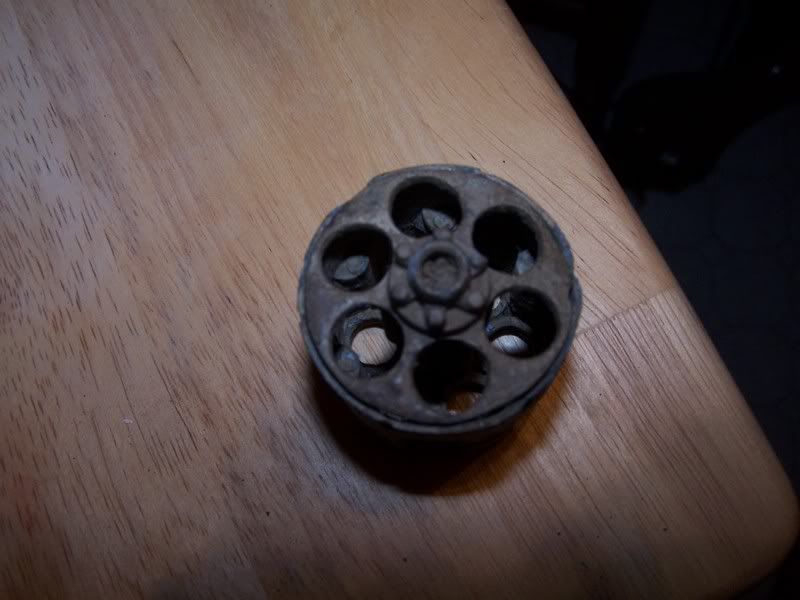
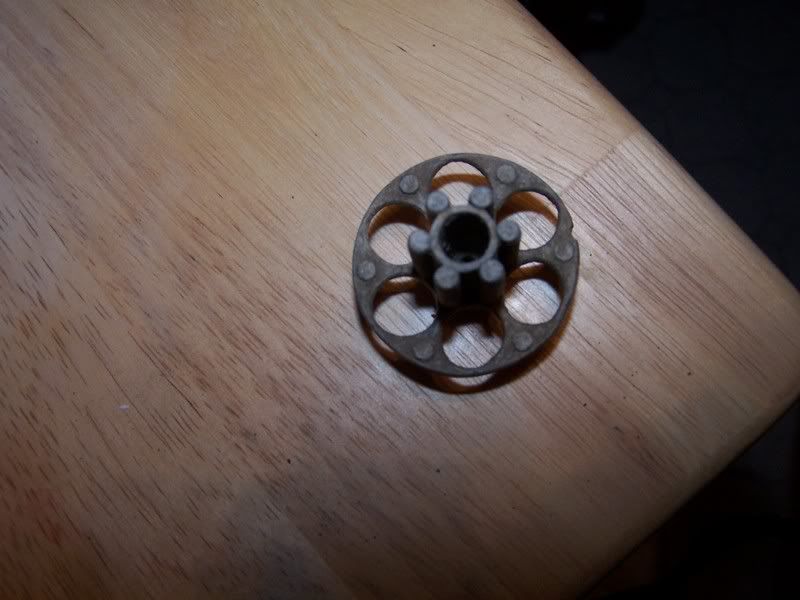
About ten years ago near the community of Rankin, I found some artifacts metal detecting. First I came across a cylinder to what appears to be part of a toy gun. I was thinking people may have dumped trash here. Then near a tree I came across a padlock then part of a belt buckle. The lock looked old and didn't have the connecting loop just the pad part. On the pad it says "RFD". Which I was thinking might mean Rankin Fire Department. But on the other side it says "MAIL". A little later by coincidence, a lovely postal employee brought to my attention that a new stamp was coming in commemoration of the 100 years of Rural Free Delivery by the US Post Office. So I'm guessing that possibly the pad lock was meant for a mail bag that had a belt around it. Or maybe the it locked a door to a cabinet. Also I was told by an old timer that once there was an old road that crossed the area where I found the pad lock. The road supposedly went across an area that is now a corp lake. Maybe something happened on the delivery or a hand off. It's possible that maybe somebody just used the lock for personal use and it ended up out here. If the mind wonders enough you could imagine some thief who stole a bag or something that was locked up and took it out here and cut off the lock.
Rural Free Delivery
The rural free delivery system also contributed to the development of a parcel post system and played an important part in the good roads movement. True to some of the dire predictions of its early opponents, however, RFD cut into the profits of main street retailers; brought an exotic and sometimes threatening urban culture into rural living rooms; and added to the growing sense that residents of small towns lived at the margins of a consumer economy dominated by America's biggest cities.
All those roads that go deep into the woods or the country pretty much were a result of people wanting to get there mail. You know how picky the mail can be if you have ever lived out in the country. If a road was too muddy or difficult the mail wouldn't deliver. The person out in the country would have to ride or walk into town and get their mail. I have read where some citizens took it upon their selves to finance some good roads to their place so they could get their mail delivered. They weren't going to wait on the government.
THIS VIDEO IS FROM 1903 AND SHOWS A RURAL FREE DELIVERY HAND OFF. I DON'T KNOW THE LOCATION. BUT YOU CAN DEFINITELY TELL IT IS RURAL.
Here is a mail drop off Aug 22, 1903. Cute little kids walking buy witrh their dog in the lead.
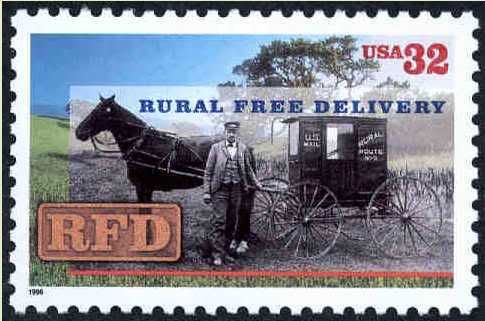 Commemorative stamp
 Old picture of a RFD wagon
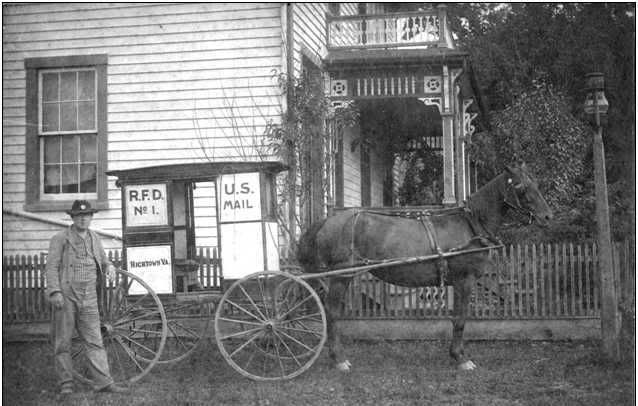 another old RFD pic
PICTURES OF THE PAD LOCK
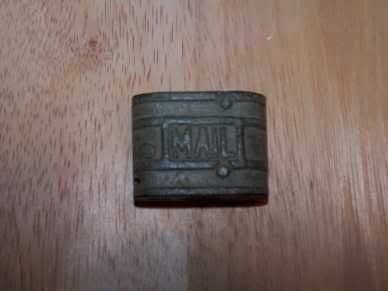
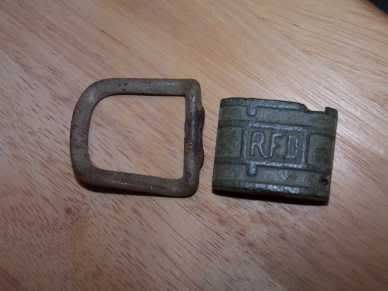
LINKS TO PICTURE OF THE TOY GUN CYLINDER
CYLINDER
CYLINDER1
CYLINDER2

CYLINDER PART
Tuesday, August 14, 2007
Why Ovilla is dry -Double-Barreled Shotguns
It's a mentality that stays in Ovilla today. Especially now since Ovilla is not the commercial hub it use to be in the 1850's. Now it's a place you want to retire or raise your kids and keep out the outside world the most you can. Leave all the violent crime and sinful pleasure business' in other communities. Ovillians can just drive to them if they need them. Of course having 5 or 6 churches in such a small community helps keep the those evil spirits out of town.
Ovilla in it's early days of the 1850's was a fairly big community for it's time but it was made of Church going people. Diehard Christians. Shiloh Church was the backbone and the community formed it's morals around it. They liked it that way. Keep the carnal in other towns. Well when some Dallas boys showed up to set up a mobile saloon near the Shiloh meetings, the citizens became the mighty hand of God. Shiloh was a big attraction and these Dallas boys were sent by a business man to capitalize on the Churches traffic. But didn't account for the Christians of action in the congregation.
The following is an account from the early days of Ovilla. Just for reference, according to an inflation calculator, what cost $300.00 in 1850 would cost $7014.96 in 2006. The recollection was written in 1890's about an even earlier time in Ovilla History.
Ovilla in it's early days of the 1850's was a fairly big community for it's time but it was made of Church going people. Diehard Christians. Shiloh Church was the backbone and the community formed it's morals around it. They liked it that way. Keep the carnal in other towns. Well when some Dallas boys showed up to set up a mobile saloon near the Shiloh meetings, the citizens became the mighty hand of God. Shiloh was a big attraction and these Dallas boys were sent by a business man to capitalize on the Churches traffic. But didn't account for the Christians of action in the congregation.
The following is an account from the early days of Ovilla. Just for reference, according to an inflation calculator, what cost $300.00 in 1850 would cost $7014.96 in 2006. The recollection was written in 1890's about an even earlier time in Ovilla History.
"HISTORY OF ELLIS COUNTY.
Be it said to the honor of the early settlers, not only of Ellis county, but all over the State, that it was considered beneath the dignity of a man to misbehave at church; and so general was this the case, that if any one violated the rules of decorum, he was spotted as not a Texan, and this was not only true among church people, but even among those of desperate character. This state of decorum continued for quite a number of years, until people began to flock into Texas in large numbers, and then and not until then people began to misbehave at church. Es-
pecially was this true at Shiloh, at which time a man of Dallas sent some boys with "material" to Shiloh during one of these protracted occasions to run a saloon. When they opened up they were waited upon by the authorities to leave, but did not leave. Then the owner of the land waited upon them and notified them to desist, but still of no avail. Then a legal notice was issued and read to them, whereupon the boys began to pack up and dilly-dallied about it until services began at the stand; then started, and, as they passed the stand, fired off their pistols, putting their team to the top of their speed. Whereupon the male part of the congregation with one impulse arose and gave chase, overtaking them in about a half-mile, brought them back, tried them, bound them over to court, and placed them in the church house under guard. Their friends said there were not men enough on the camp-ground to keep them until morning, but by sundown we had twelve double-barreled shot-guns well charged, while the rabble on the outside numbered between fifty and a hundred; but we kept them all the tame till morning. Then their friends said we could not take them to Waxahachie; but we did, and lodged them in jail, and it cost the man who sent them to run the saloon about $300. Right here permit me to remark, though it is not a part of the history of Shiloh church, that doubtless through the influence of Shiloh no saloon has ever existed in the neighborhood, though it was tried a few years ago; but died in a short time for want of patronage." from the memories and biographies of ellis county
Tuesday, August 7, 2007
-------Katie Litty Daffan----------

Katie Daffan
The prolific Miss Katie Daffan was born on July 29, 1874, in Brenham, Texas, daughter of Laurence A. and Mollie (Day) Daffan. Her father was an official of the Houston & Texas Central railroad. Miss Daffan was raised in Ennis. She died in Ennis on May 22, 1951 after being hit by a car the intersection of Dallas St and W Baylor in Ennis, Texas.
HERE IS A LIST OF HER ACCOMPLISHMENTS PROBABLY NOT ALL OF THEM. (SHE COULD HAVE USED A BLACKBERRY.)
She was a graduate of the Corsicana class of 1890 ,also graduated from Hollins Institute in Virginia, was a special history student at the universities of Texas and Chicago, She taught elementary school in Ennis and San Augustine and high school history in Houston, served as principal of a girls' school in Dallas, and taught summer sessions in the normal schools of East Texas, first Vice President of the State of Texas Teachers Association,on the Texas State Text-Book Board, state secretary to the General Federation of Women's Clubs, the first president of the Houston Story Tellers Club, first vice president of the Texas Historical Society, superintendent of the Confederate Woman's Home in Austin in 1911 making her the first woman in Texas appointed to head a state institution, she wrote or edited around 7 books(some articles say 8), her book Texas Heroes
 was adopted as a Texas school text book, She served five terms as president of the Texas Division of the United Daughters of the Confederacy,state historian of the Daughters of the American Revolution (1909-10),state secretary to the General Federation of Women's Clubs (1909), first vice president of the Texas State Historical Association (1912, 1913, 1914)she was a member of the Daughters of the Republic of Texas,a charter member of Houston Pen Women, a board member of the Houston Public Library (1904-29),charter member of the Houston Board of Recreation (1922-29), first president of the Houston Storyteller's Club (1922-29). twice appointed sponsor for Texas to the General Confederate reunions and in May 1913 was appointed sponsor for the South to the General Confederate Reunion held in Chattanooga,Tennessee-the highest social honor conferred upon a woman of the South, hostess for Texas at the 1904 World’s Fair in St. Louis, ,She was also secretary for life of Hood's Texas Brigade, in which her father had served,Daffan was literary editor of the Houston Chronicle(7 year term),president of the Texas Women’s Press Association,delivered the welcome address that formally introduced Pres. William Howard Taft on his official visit to Houston in 1909, ran three times for public office, came close to winning a seat in the Texas House of Representatives in 1922, campaigned for Governor of Texas in 1930,and feature columnist for the Ennis Daily News from 1936 to 1950.
HER BOOKS:wrote or edited New Orleans (1906), Woman in History (1908), My Father as I Remember Him (1908), The Woman on Pine Springs Road (1910), As Thinketh a Woman (poems, 1911), Texas Hero Stories (1912), History of the United States (1924), and Texas Heros (1924)
Yeah,it almost seems impossible someone could be that prolific. She was the definition of prolific and a trailblazer for the modern woman.
She did marry in 1897 but it was short lived. In fact she came back from her Honeymoon alone. It never was known the true reason for the marriage's failure. Her Husband Mann Trice, assistant attorney general of Texas, went all out for the wedding which took place at the Daffan House on Dallas street in Ennis. He had a red carpet placed at the train station before they went off on their honeymoon. It seemed it was off to a great start. Latter people have speculated this marriage failure to her questionable sexual orientation. But this could be dismissed by those who knew her that said she never got over Mr Trice. Seems more probable that her social activities and independence were not what Mr. Trice expected of his wife and realized it would never work.
Here is a recollection of Mr. George Graves, Jr. who is a long time resident of Ennis and has a deep heritage in Ennis. You can see that in her later years Miss Daffan became a more eccentric character through his personal encounters as recalled in the Ennis Daily New's Story.
"Graves remembers many local personalities from Ennis’past. A boarder with the redoubtable “Miss Katie” Daffan in 1948, he once put out a fire caused by a water heater in the well-known author’s house on Dallas St. and won her heart. But he said that the eccentric Daffan soon forgot his heroism and in order to redecorate the upper floors of her home, practically threw him out of his room."
Mr Graves' son, Kevin Graves, recalled his fathers' stories of Miss Daffan in more detail on his Kevboy Flikr web-site.
"Another aside to this woman. My Dad was rooming in this house when his sister and children moved back home, he moved out to give them room. Dad said the old boiler in the house was red hot and the wallpaper was scorching. He turned it off. She exclaimed "Oh, Mr. Graves! You have saved my beautiful home!....I shall forever be grateful to you!" Three weeks later, she told he and another border they had to move because she was having the house papered. She made the paperers paper around all the photos and paintings on the wall, because her mother had hung the pictures and they had never been off the walls. Dad said the paperers waited till Miss Katy left the house and went right ahead and took the photos down and papered under them, knowing SHE would never take them down to check. Three weeks later, Miss Katie saw my Dad in town, and chirped "you room is ready for you, Mr. Graves. Mr. Graves had found other accommodations. Miss Katie was quite the character. She would walk into the Post Office and buy whatever she wanted and say "put those on my account". The bewildered clerk would say "but Miss Katie, no one has an account at the post office! Overhearing, the Postmaster, Mr. Barney would yell, "CLERK, put those on Miss Katie's account as she told you". Of course HE was paying for it. She got a lot of mileage out of being eccentric."
Kevin elaborates on her death and the Daffan house destruction.
"Tragically, Miss Katie was run down by a car in front of" her "house on her late night coffee run." "Her nightly haunt."
 N 32 19.661 W 096 37.659
HISTORICAL MARKER TO RECOGNIZE MRS KATIE'S LIFE AND DEATH.
What Katie's Historical Marker says:
"Katie Daffan
July 29, 1874 - May 22, 1951
Location: Pierce Park, Northwest Main Street, Ennis
Born in Brenham, Katie Lilly Daffan was a well-known author, educator, journalist, and club woman. She began her career as a teacher and was an officer of the Texas State Historical Association. She wrote several books, including a Texas history textbook. Active in the United Daughters of the Confederacy, she served from 1911 to 1918 as superintendent of the Confederate Woman's Home in Austin. She was Literary Editor of the Houston Chronicle from 1921 to 1928. Miss Daffan taught school in Ennis and was feature columnist for the Ennis Daily News 1936-1950. She died here in 1951. [Recorded Texas Historic Landmark Texas Sesquicentennial 1836-1986] "

"The house was sold and in 1962." "It was sadly razed in 1960 when Safeway went in." "Nothing was taken out of the house. I remember seeing the wrecking ball tear it down."Kevin was only 5 but remembered thinking "why?" did they take down the house.

THE ABANDONED SAFEWAY 302 N DALLAS STREET
Kevin has a great picture on his "Flikr" account that his Dad, Mr George Graves Jr., had taken in 1938. Mr Graves and his cousin had climbed the old grain elevator in Ennis. It is across from the Sonic and behind the Diamond Shamrock today. If you run your mouse across the picture the picture will highlight the Daffan house on N Dallas street. The picture can be found here.

HISTORICAL MARKER VIEWED FROM WHERE THE APPROXIMATE LOCATION OF WHERE HER HOUSE WOULD HAVE BEEN. MAYBE A HUNDRED TO A HUNDRED FIFTY YARDS AWAY
------------------------------------------------------------------------------------------------------
Ennis Daily News Special History Edition Feb 29th 2008
Get a copy of the Ennis Daily News paper from 02/29/2008(leap day) it has great detail into Katie Daffan's life. Managing Editor, Randy Bryan Bigham, is writing a book about Katie Daffan and if not by know will be the authority on her life. Randy also informed me that the Ennis Library has a wealth of Katie's material that includes literature and pictures. Randy is even getting to know her little quirks like how she always used two cups to drink her coffee. She would pour her coffee back and forth from one cup to another until it cooled down. In the Feb 29th article it gives a good detail into Katie's Death. It goes on to tell how Katie had left Miss Pearl's cafe at 3 am May 17, 1951 to return home.
 (Picture is of old Interurban Station at the corner of W Baylor and Dallas St. Probably looks similar to what it did in 1951. Interurban had been shutdown for 10 years when Katie was killed)While crossing W Baylor on Dallas St she was ran over by Vesta McClain. Miss Katie died of her wounds 5 days later at the local hospital on May 22, 1951. Vesta was charged with manslaughter but charges were dropped. I've heard that Katie's family believed that Katie would not have wanted Vesta McClain charged with her murder.
I have always told people that a play should be made about Miss Katie and thought to mention this to my Mother's close friend PJ Searsy who runs the Waxahachie Community Theater. Well apparently a Mrs Sandra Wakefield of Ennis is planning to take on the eccentric Katie in a one woman play. The play should open within a year. It is to raise money for the historic archives of the Ennis Public Library. Read more of the Ennis Daily News article at the above Sandra Wakefield link.
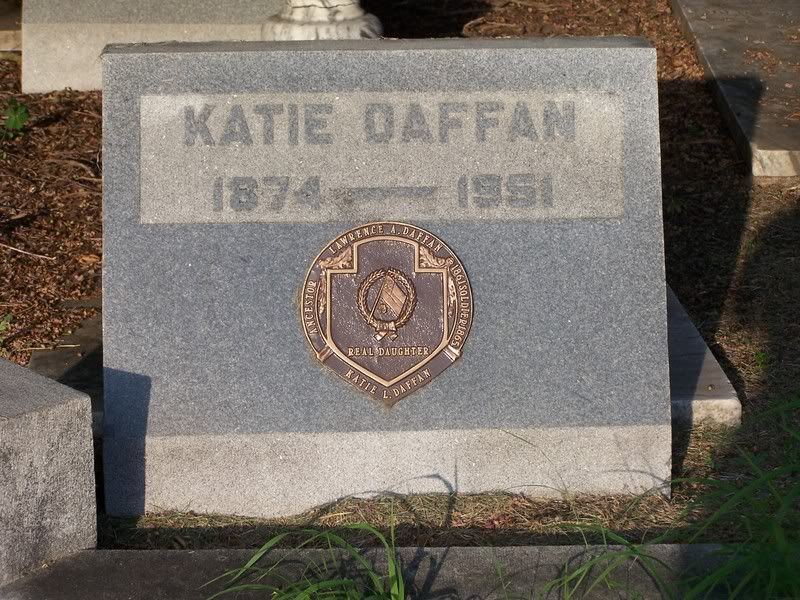
Miss Katie's burial site is located in the Myrtle cemetery in Ennis, Texas. Within in a mile from the location of her house and the site of her death.

This emblem is on Katie's tombstone.
Daffan Family grave pictures
Daffan Family grave site picture
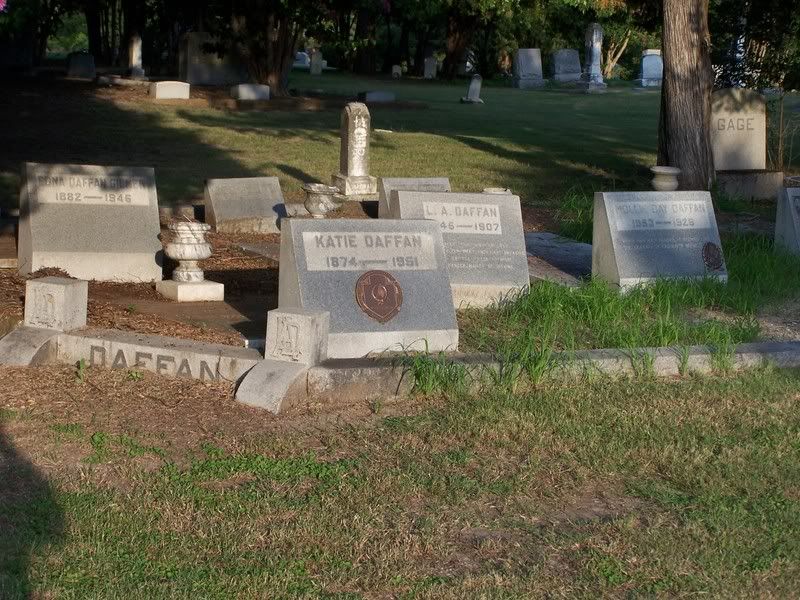
Another Daffan Family grave site picture
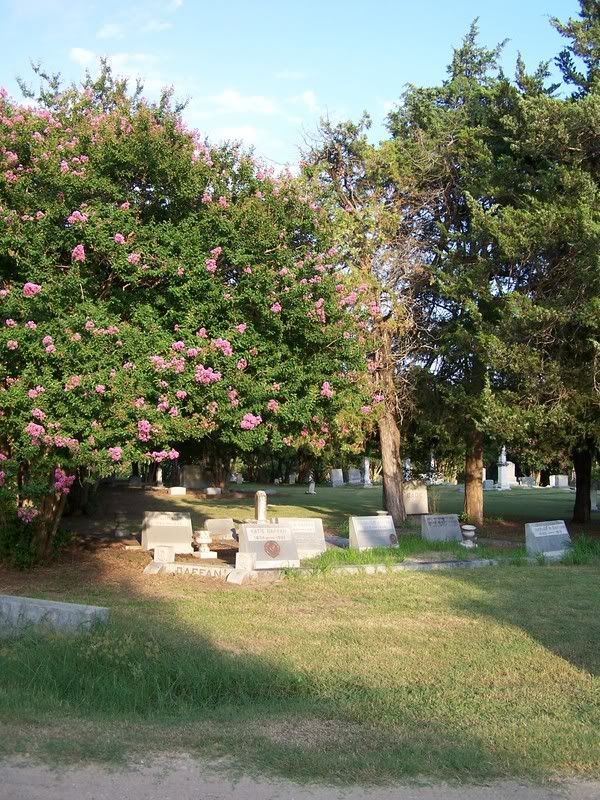
Katie Daffan grave stone flat
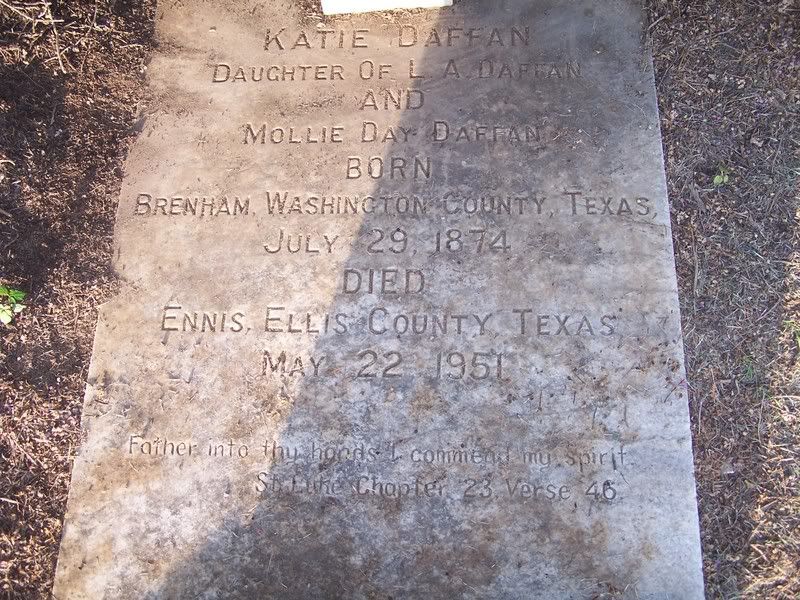
Katie Daffan tombstone vertical
Monday, August 6, 2007
The Night They Drove The Settlers Down To Waxahachie And How Soap Creek Got It's Name
--------------SOAP CREEK------------------

Ok, the title is stretched to try to match the classic song by The Band. But one day in early Ellis County History half the settlement near Alvarado fled to Waxahachie. The new settlement was made up of Ovillians who decided to start there own community. Rev White was a resident of Ovilla at the time of the evacuation but was asked to come teach in the new community for the Summer. My guess is that the event happened in the 1850's. Seeing that the Rev started living in Ovilla around 1850. This event also gave Soap Creek it's name. Which it still holds today. The above picture is where 67 goes over Soap Creek. Which might have been where they crossed Soap Creek during their evacuation. They could have crossed further south because the story says the end up on a high point south of Waxahachie. Soap Creek follows VV jones road for awhile and ends just south of Midlothian. I thought it interesting how the Rev White shrugs off the danger but still evacuates because he wants to visit a young lady in Waxahachie. I wonder if the young lady he wanted to visit was his first wife? Anyway read his recount to find out the reason for the evacuation and then what was the true story behind the bru-ha-ha. The incident is referred to as Mitchell's War.
Here is the recollection Of Rev. R. M. White:

Ok, the title is stretched to try to match the classic song by The Band. But one day in early Ellis County History half the settlement near Alvarado fled to Waxahachie. The new settlement was made up of Ovillians who decided to start there own community. Rev White was a resident of Ovilla at the time of the evacuation but was asked to come teach in the new community for the Summer. My guess is that the event happened in the 1850's. Seeing that the Rev started living in Ovilla around 1850. This event also gave Soap Creek it's name. Which it still holds today. The above picture is where 67 goes over Soap Creek. Which might have been where they crossed Soap Creek during their evacuation. They could have crossed further south because the story says the end up on a high point south of Waxahachie. Soap Creek follows VV jones road for awhile and ends just south of Midlothian. I thought it interesting how the Rev White shrugs off the danger but still evacuates because he wants to visit a young lady in Waxahachie. I wonder if the young lady he wanted to visit was his first wife? Anyway read his recount to find out the reason for the evacuation and then what was the true story behind the bru-ha-ha. The incident is referred to as Mitchell's War.
Here is the recollection Of Rev. R. M. White:
"a report was circulated that the Indians were coming in overwhelming numbers, killing people along their route and devastating the country. They had taken the forts, so it was said, and were marching along in triumph. A courier was sent from Waxahachie notifying us of our danger and requesting us to be at that town before nightfall, for safety and defense A council of war was called to meet at the school-house, and after discussing the matter it was very much doubted whether the Indians were on the war-path; yet, as a matter of courtesy to the "Waxahatchets, combined with a faint probability that the report might be partly true, a rendezvous was appointed at the corner of Captain Bache's field. About one hour by sun the entire settlement had arrived in their wagons, with wives and little ones and such household goods as they could bring under the circumstances. The order being given to march, Aunt Susie Billingsly mounted a rock and called the assemblage to order. She then referred to their bravery and heroic conduct in Tennessee, Arkansas, and other sections where they had settled new countries; where they had fought and driven out the Indians, and now when they were more numerous and with no Indians within a hundred miles, they would flee from their homes and all they held dear! " Where, O, where," said the staunch old lady, " is your heroism of former days?" She then avowed that she could and would whip all the Indians that came; that they could do as they pleased, but that she, like Joshua of old, was going back home and would sleep soundly under her own roof. Thereupon, about one-half of the party returned to their homes, the others taking up the line of march for Waxahachie, I among the number, not that I believed the report, but I wished to come home any way to see friends, and especially a certain young lady. This I could consistently do, as I would have but little school where half or more of the children were gone. So, on we traveled, the wagons squeaking, as they were the wooden-axle sort, and no grease upon them. I and the young ladies put in the time singing and laughing to drown the noise of the wheels and the discordant jingle of bells, which were numerous. One good old sister called us to order, saying she thought prayers would be more appropriate to the occasion, as we did not know what moment we would be killed. I replied that if we had not prayed before, it was too late now, and that scared prayers would not avail much, if anything. On we went until finally reaching a creek, the largest one in the valley between Alva-rado and the Ovilla settlement. Going down the bank of this stream, which was steep, the goods of Mr. John Balch burst the front end gate of the wagon bed and the contents of the wagon, among which was a half barrel of soft soap, were spilled into the creek. I exclaimed, " Soap creek," which name it bears to this day. The damages being repaired as well as we could under the circumstances and the goods placed in the wagon, we moved on, reaching the top of the eminence south of the city of Waxahachie before daylight; then on to the houses of friends, and especially to the domicile of my dulciana. The Waxahatchets had gathered into the town and put out guards, some of whom were still at the ford or bridge of the creek south of the town. Seeing something in the distance they imagined that they saw a vast body.of Indians approaching the town. They gave the alarm and scouts were sent out to reconnoiter, when they discovered the visitors to be a herd of cattle that had stationed themselves on the eminence, as is their custom, to rest and ruminate. Day arrived and it was learned that the foundation for the alarming rumor was that a man had gone out to trade with the Indians and had taken too much of the devil's ale with him, which the redskins drank freely. The trader thought that when he had gotten them under the influence of the liquor he could cheat them more easily, but they caught him at his tricks and were about to get in their work on him, when he fled, and spread the report as stated above. Peace being restored, the settlers returned to their homes, doubtless wiser from their experience."
Subscribe to:
Posts (Atom)
