Blog Catalog

History Blogs - Blog Catalog Blog Directory

Followers

Showing posts with label J F Strickland. Show all posts

Saturday, February 21, 2009

---------Texas Interurban Railway-------


Fred Fitch gave birth to the idea of an interurban electrified railway in North Texas. He wanted to connect Denison and Sherman. In 1899 Fitch asked R H McWilley to survey a route between Denison and Sherman. Fitch and partners purchased College Hills and Park Railway and the City Street Railway Co. of Sherman. Their idea was to compete with the Houston and Texas Central. He would offer more frequent and efficient travel than the HT&C. The population was booming in the Denison-Sherman area and commerce was the catalyst. To insure business and get bodies on Fitch's railway they came up with an attraction between the two cities. Woodlake park was a recreational place for swimming,dancing,boating and family picnics. It was the Six Flags of it's time. Woodlake eventually had a 900 seat theater. The Denison and Sherman Railway remained the same until 1909 when in walks J. F. Strickland who invisioned it's expansion.

J F Strickland at the age of 32 managed the Electric Utility of Waxahachie, Texas. His company later merged with Hilsboro, Cleburne, Dublin,Bonham, and Sherman. He organized the Southwest Electrical Gas Association. In 1905 Strickland,Osce Goodwin,and M B Templeton of Waxahachie wanted to connect the Denison Sherman to Dallas. On September 25,1906 Strickland formed the Texas Traction Company. He conjured up 7 million for the venture. In 1909 J. F. Strickland Company bought controlling stock interest in the Denison Sherman Railway. On April 16th, 1911 the Denison Sherman Railway was sold to the Texas Traction Company. Fred A Jones company of Dallas designed and constructed the line. MIT graduate, Theodore Stebbins was the General Manager of the project. The line used two 1000 kilowatt curtis steam turbine generating units. 300 watt rotary converters supplied 600 dc volts to the trolley wire. The trolley wire was 000 copper wire suspended 19 feet above the rails. Limited service between Sherman and Dallas began October 8,1911. By 1923 the cars were traveling up to a blazing speed of 65 mph. While expanding to the south, the Southern Traction Company was hampered by by light ballasting which limited it's speed to 40 mph.

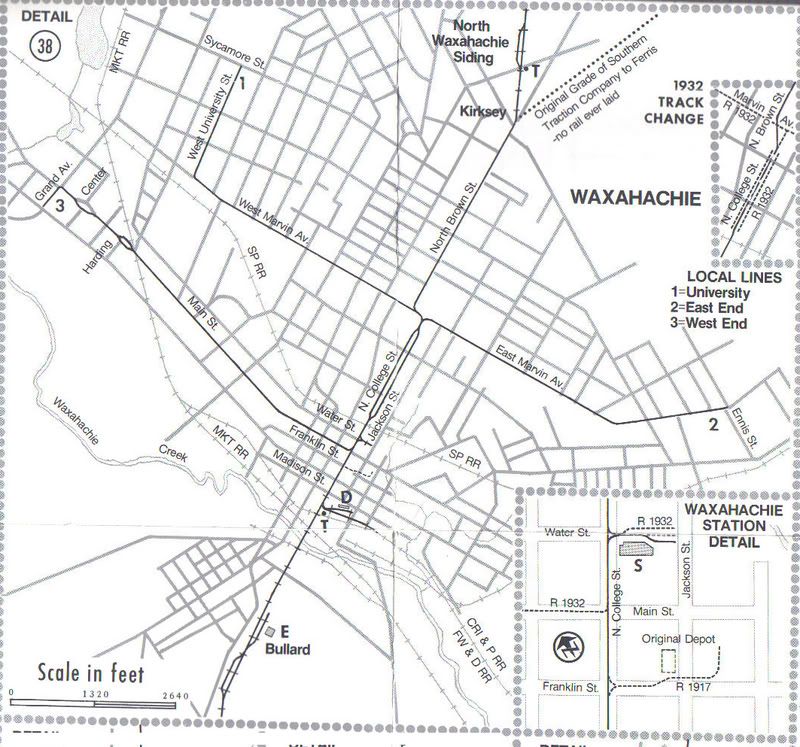
In 1912 Waxahachie's mule car line, Waxahachie Street Railway Company, was already being converted to electric cars after being purchased by the Southern Traction Company. But the interurbancame to town around the same time so it took most of the people's attention. I believe that a city railway operated separate from the interurban so that you could pretty much go anywhere in town. On the map the city railway branched off the interurban on East Marvin to West University stopping at Sycamore and West Marvin stopping at Ennis st and also traveled down Main street stopping at Grand avenue. Waxahachie's Mayor Prince drove in the last spike in Waxahachie on September 30, 1913 and the "Stock holder Inspection Trip" made the first runs from Hillsboro to Waxahachie and Dallas to Waxahachie. The stockholders left Dallas and Hillsboro at 10:00 am planning to arrive in Waxahachie by 11:30 am. Now, the women of Waxahachie could pack a lunch and spend the day shopping in Dallas and be back in Waxahachie for dinner. In 1913 the automobile still wasn't the norm for travel so you could imagine the efficiency of the traveling on the Interurban.

The merger of Strickland's Texas Traction and Southern Traction created the Texas Electrci Railway. The merger took place on January 31, 1917. J. F. Strickland was elected president. The peak of the interurban patronage was 1920 when they recorded a total of 819,000 passengers. It's decline began in 1930 and the interurban started taking freight to make up for the loss of passenger revenue. But by 1948 the last interurban trip was taken to Waco on the last day of the year. The individualism of the American and his automobile and the development of good roads brought down the interurban. Tale tale signs were noticed by interurban management when they took note of individuals with automobiles stealing their customers at the interurban stations. If the customer was only going a short distance the automobile driver was more efficient but the long trips were better taken on the interurban until the roads got better. When the rods did get better on of the major customers lost by the interurban was the traveling salesmen. They were buying their own cars and hitting the road instead of using the interurban.

NOTE:Now if you noticed Ovilla was left out of the interurban path. Which was another reason for Ovilla's quaintness today besides the fires and the bypass of the railroad. So Ovillians most likely would go to Red Oak or Waxahachie and catch a ride. One incident documented in the Ovilla History Book was that of Bud Cason returning in 1943 from his Pacific service in WWII . As he got off the bus in Dallas he "got on the electric trolley to the little town of Red Oak."

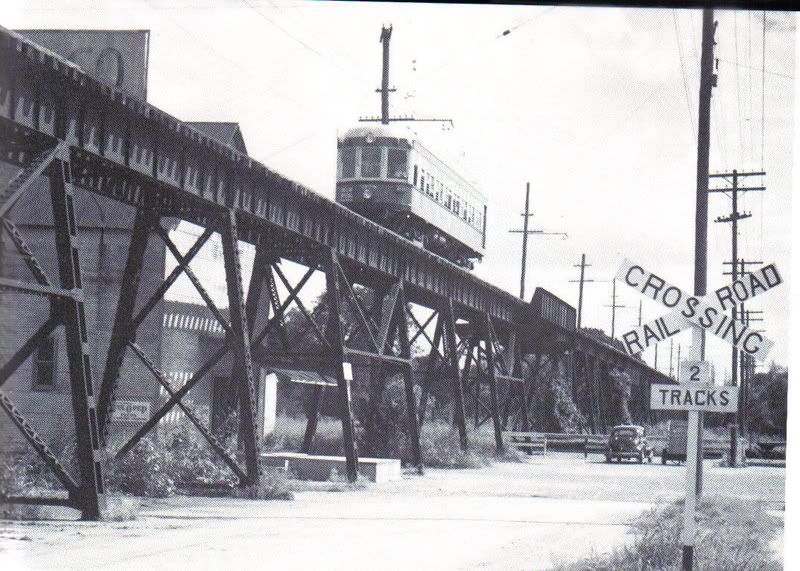
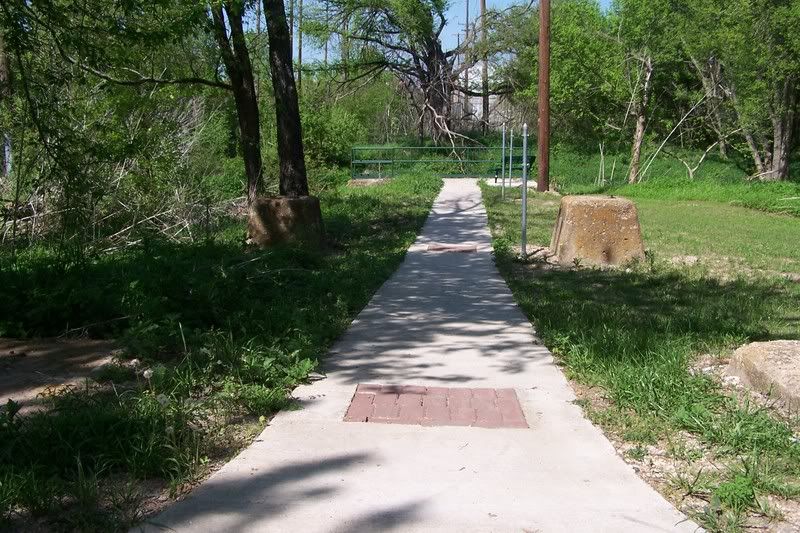
WAXAHACHIE TRESSEL FOR INTERURBAN WAXAHACHIE. OTHER IS REMAINS OF TRESSEL PATH SOUTH OF DOWNTOWN WAXAHACHIE

.......................................................................................................................................................


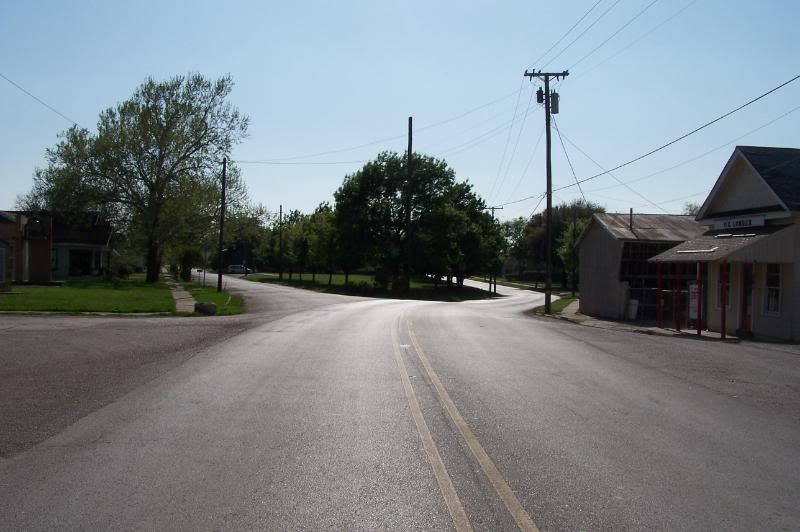
MAIN ST IN ITALY. CLARK STREET TO THE LEFT IS WHERE THE INTERURBAN TRAVELED ON TO MILFORD

--------------------------------------------------------------------------------------
THIS APPEARS TO BE WHERE THE TER CAME IN FROM THE EAST TO ITALY. NOTICE THE RAISED EARTH AND THAT IT COMES IN AROUND WHERE SAN JACINTO ST. STARTS.


LEFT IS ITALY 2008 AT GARCIA STREET/MAIN ST AND THE RIGHT IS ITALY 1948 INTERURBAN WHERE SAN JACINTO STREET THEN CAME TO THE INTERURBAN STATION


......................................................................................................................................................................
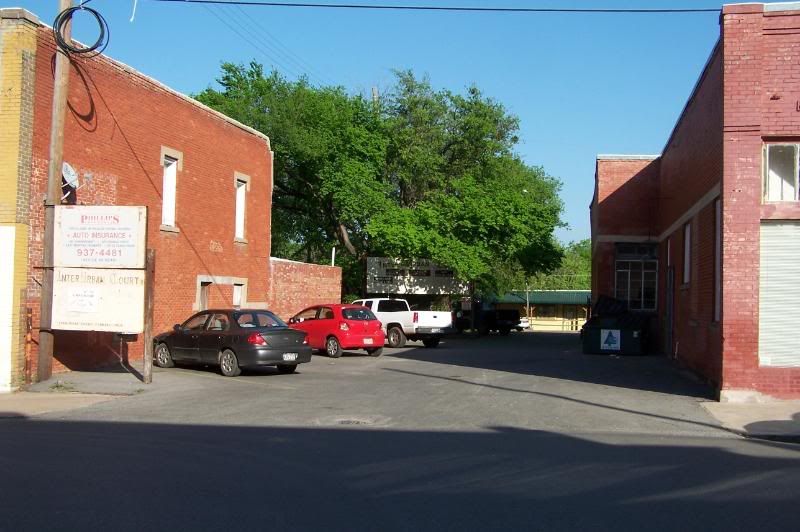
INTERURBAN COURT IN WAXAHACHIE ON COLLEGE ST. WHERE PATRONS WAITED TO RIDE.

.........................................................................................................
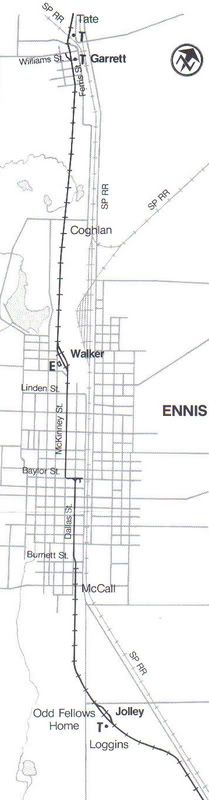
Ennis Interurban Station on Dallas Street and West Baylor where Ennis Black Belt Academy is located


Note: I believe interurban cars could be parked on the back on the West Baylor side

...................................................................................................................................


INTERURBAN FACTS

"The electric interurban industry in Texas totaled nearly 500 miles, the second largest interurban mileage among the states west of the Mississippi River. Most of this mileage was in place by 1913, as the industry grew rapidly during the early 1900s to fill the need for frequent passenger service between urban centers that could not be met by existing steam-railroad service. About 70 percent of the mileage was in the Dallas-Fort Worth area, where electric lines connected Fort Worth and Cleburne, Fort Worth and Dallas, and Denison, Dallas, Corsicana, and Waco. Another 20 percent was in the Houston-Galveston and Beaumont-Port Arthur areas. The rest was scattered around the state. The decline in mileage was also swift, however, as the growth of improved highways and widespread private car ownership combined to siphon off most of the interurban ridership. By the end of 1941 only two lines, the Texas Electric and the Houston North Shore, a subsidiary of the Missouri Pacific, remained; they were both discontinued in 1948."


PLANO HISTORY

----------------------- MAPS OF INTERURBAN IN TOWNS--------------
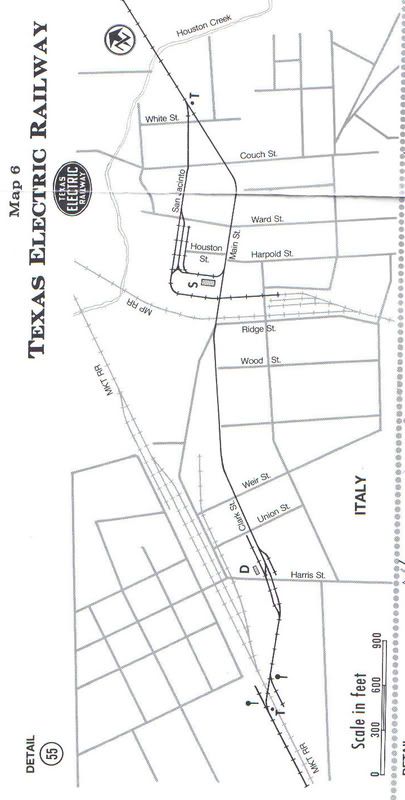


Sources:Ellis County History Overview, Ovilla History Book,Texas Electrci Railway,When cotton Reigned King: Waxahachie

Monday, June 2, 2008

The Waxahachie White Men's Primary

The White Men's Primary was designed to keep Black folk from voting or making their vote in the general election pretty much useless. This law made primary voting for "whites only." Whites knew the South was made of the one-party states (Democratic then), so they were insured their nominee from the primary would be the victor. It's amazing that it took until 1944 to find the "White Primary" unconstitutional. Some Southern Whites also tried poll taxes and literacy tests to keep minorities from voting.

The below article from the Waxahachie Enterprise shouldn't surprise me because we all know what Ellis County in The Old South thought about Black's voting. At least we know the majority opinion. But the fact in the second article the author explains with excitement how the "White Primary" was successful in disenfranchising the Black man, left me sick to my stomach. Times have definitely changed. The media would be on the exact opposite side of this event today. The media can't ever seem to find the true journalistic position. It mainly goes too far left now a days. Maybe trying to make a mends for it's past atrocities.

Note that candidate J F Strickland became the President of Texas Power and Light and organized The Texas Electric Railway, but he couldn't win Mayor of Waxahachie. Lost by 33 votes. Also note the two articles dated the same day might be different authors because the first story says it was the "quietest election in the history of the city";but, the next story describes the race as "hotly" contested. Unless the author(s) is referring to the fact that the White folk weren't upset because Black folk weren't getting to vote and the race between the White candidates were "hotly" contested?
------------------------WAXAHACHIE ENTERPRISE----------------------
3-24-1899 'The. Primary Election - The Quietest Election in the History of the City Since It Has been an Incorporated Town.
It was mutually agreed by all conservative citizens of this city that the primary last Thursday was the quietest in the history of the town.
At box No. 1, Ed Hawkins was presiding judge but was excused, Jon. F. Wyatt acted as presiding judge, with T. F. Thompson, Jim Morton and George Crow as associate judges; Robt. Beale, Shan Partain, Sara Cawthon and George Crump, clerks.
At Box No. 2, Joe P. Cooper was presiding judge, with P. H. Templeton, L. H. Peters associate judges, and J. L. Deegan, G. W. Coleman, P.T.Crisler, Jon. F. Dunlap and J. J. Metcalfe, clerks.
•At box No. 3, Ed Williams was presiding judge, Sam Fisher, C. J. Harris, W. Schuster and S. T. Barton associate judges, and James 0. Hammett, Sam Hickman, Charles Teutsch, and Jake Mincer,. clerks.

The result by wards is as follows:: . Ward No. 1.
For Mayor - ' J. F. Strickland,67; E.A.DuBose, 25,H. E. Pickett, 82-------
Ward No. 2. For Mayor -. J. F. Strickland,117,.DuBose, 53,-Pickett, 109
' Ward. No. 3-For Mayor., - J. F. Strickland, 69; DuBose, 38; Pickett, 95 •
Mr. Pickett's majority over Mr. Strickland is 33, he having received 286 votes and Mr. Strickland 253. Mr. Pickett, is therefore, the nominee and will be elected on the first Tuesday in April. Mr. S. P. Langsford will succeed Mr. Dowdy as Alderman in Ward No.2. The total vote cast was 66l, only a little more than half the full vote of the city.
3~24~l899 Our Mayoralty Nominee
Waxahachie has just passed through- what is considered the most hotly contested race for mayor that was ever known in the history of the city, and there are circumstances connected with it that make the election one of peculiar interest. Two years ago many of our best citizens began to agitate the question of primary elections for city offices in order to eliminate the negro from city politics. The fruit did not quite ripen then, but this time it did as was evidenced by the fact that a large majority of white voters signed a petition for a white man's primary. The day was set for March 16 and all four candidates, two of whom did not announce until, after the primary call, were before the people. One of these, Mr. Harry E. Pickett, was successful. Every inch of the ground was closely contested and Mr. Pickett came out thirty-three votes ahead of the next highest man. Mr. Pickett is a "native and to the manner born," he was reared in Waxahachie and educated at Marvin College and Vanderbilt University', Nashville, Tennessee. He is not a new man in city or county politics. He has before served the people well as school trustee, alderman and mayor; was postmaster under Cleveland's first administration and last year was candidate for county clerk, receiving a good vote.


.

Resource is a collection of Waxahachie Enterrprise articles on business man J F Strickland in Sims Library, Waxahachie, Texas.

Friday, May 2, 2008

JF Strickland and Miss Sallie Martin's Wedding Day

8-30-1889 Orange Blossoms
Wednesday evening a very large congregation assembled at the Methodist
church to witness the marriage of Mr. J. F. Strickland and Miss Sallie
Martin. The house was brilliantly lighted, and long before the hour
appointed for the ceremony had arrived, the house was filled and many
gentlemen failed to get in. Promptly at 7 o'clock word passed down the
line, "They are coming." Every one was in a flutter to get a glimpse at
the beautiful, bride and noble groom.
The bridal party passed up the aisle in the following order: Mr. L.
Buckner and MISS Mabel Meredith, Mr. J. B. Boone and Miss Mollie Briggs-,
the bride and groom, Mr. JT E. Lancaster and Miss Pat Martin, Mr. B. L.
Davis and Miss May Siddons marched to appropriate music. . The
contracting parties took position at the alter, where Rev. M. K. Little,
in a very solemn and impressive manner performed the sacred rite, thus
uniting in hold bonds two noble and loving hearts and lives.
The Enterprise tenders to its young friends, now just launched on
the conjugal seas, its hearty congratulations and wishes for them a happy
and useful life and that they may always find in each other that sweet
consolation so essential to connubial bliss.
The bride is one of Waxahachie's fairest daughters and by her genial
disposition and affable manners has won a place in the hearts of our
society people, and for a long time has been an acknowledged bell in the
social circles of Waxahachie.
_Mr. Strickland is one of Waxahchie's most enterprising merchants and for
business tact, manly conduct, nobility of soul and honesty of purpose,
stands second to no man.
,The bride was dressed in an elegant costume of white India silk,
entraine, decollette and sleeveless - long silver mits reaching to the
shoulders, finished with tastefully arranged^ garnitures of ribbon and
lace. The front of the skirt fell in graceful folds, and the full court
train seemed familiar with every movement of its wearer. The neck was
filled with Point de Alcon lace, reaching to the waist and caught with a
spray of orange blossoms-the same flowers held'in place the delicate
bridal veil as it fell in sweeping folds to the ends of'thetrain. In her
hand she carried a bunch of Marechalniel roses. So beautiful a costume,
on so charming a creature, could not fail to excite admiration.
The Alter - • 8-30-1889
Strickland "and Miss Sallie Martin.

Note a later report states that the wedding took place on August 28th 1889. The Strickland's never had children.
Powered By Blogger